
Our Story
About AGMA
The American Guild of Musical Artists (AGMA) is the labor union of singers, dancers, and staging staff in opera, ballet and concert dance, and concert choral performance in the United States. A national union with a membership of ~7,000 artists, AGMA provides forceful advocacy and defense of its members’ employment and artistic rights. AGMA negotiates and enforces over 70 collective bargaining agreements throughout the country, ensuring fair and safe working conditions and enhancing the quality of life of its members. AGMA has a direct charter from the AFL-CIO and is affiliated with the AFL-CIO Branch of Associated Actors and Artists of America and the Department for Professional Employees (DPE). AGMA is also a part of the Coalition of Broadway Unions and Guilds (COBUG).
Please take a moment to explore our website, learn about our history, and understand the important role that AGMA, and its members, have played in the development and vitality of our nation’s most cherished cultural institutions.
Our History
The American Guild of Musical Artists (AGMA) is the labor union of the finest singers, dancers, staging staff, and faculty, staff and instructors in opera, ballet/contemporary dance, and concert choral performance in the United States.
While performing artists thrive on their passion for expression, their skills and creativity do not automatically ensure financial stability or protection from harassment, discrimination, and exploitation. Without the collective voice of a union, and the robust advocacy and legal support that comes with it, artists can face significant challenges, including unfair labor practices. AGMA forms a critical safeguard for artists, allowing them to fight for their rights and negotiate better working conditions and other critical protections.
1936
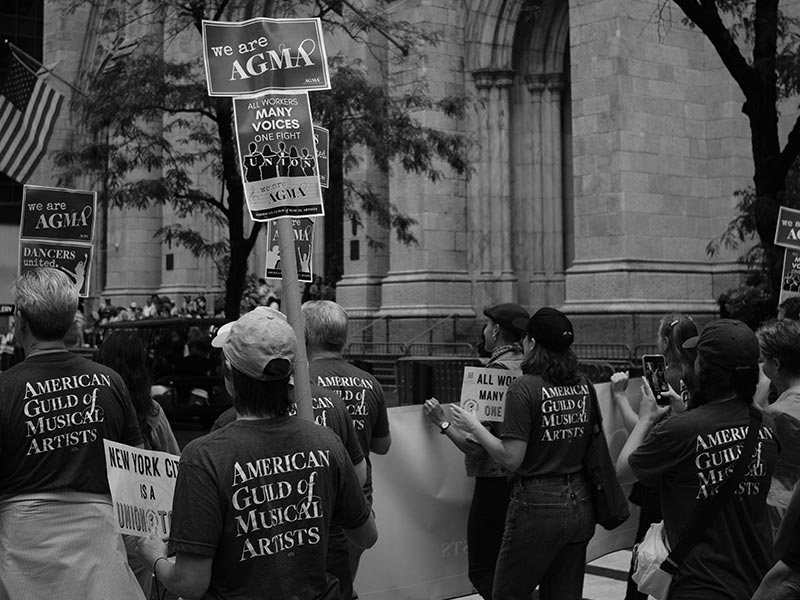
AGMA was founded in the spring of 1936, born from a conference between notable artists Lawrence Tibbett, Jascha Heifetz, and Alma Gluck. It was established in an effort to protect opera singers who were being forced into unfair contracts without benefits or protections. Its early supporters and advisors included eminent figures such as Richard Bonnelli, Frank Chapman, Richard Crooks, Kirsten Flagstad, George Gershwin, Frank La Forge, John McCormack, Lauritz Melchior, James Melton, Lily Pons, Andres Segovia, Gladys Swarthout, Deems Taylor, Fred Waring, Paul Whiteman, and Efrem Zimbalist, among others.
1937
Today
Today, AGMA has a direct charter from the AFL–CIO and is affiliated with the AFL–CIO Branch of Associated Actors and Artistes of America and the Department for Professional Employees (DPE). AGMA is also a part of the Coalition of Broadway Unions and Guilds (COBUG). The Union, led by the AGMA Board of Governors and supported by AGMA’s professional staff, negotiates and enforces over 70 collective bargaining agreements throughout the country, and continues to set industry standards, even for non-unionized companies.
The legacy of AGMA continues, with thousands of artist members standing together as a pivotal force in protecting and advancing the interests of performing artists across the United States.