
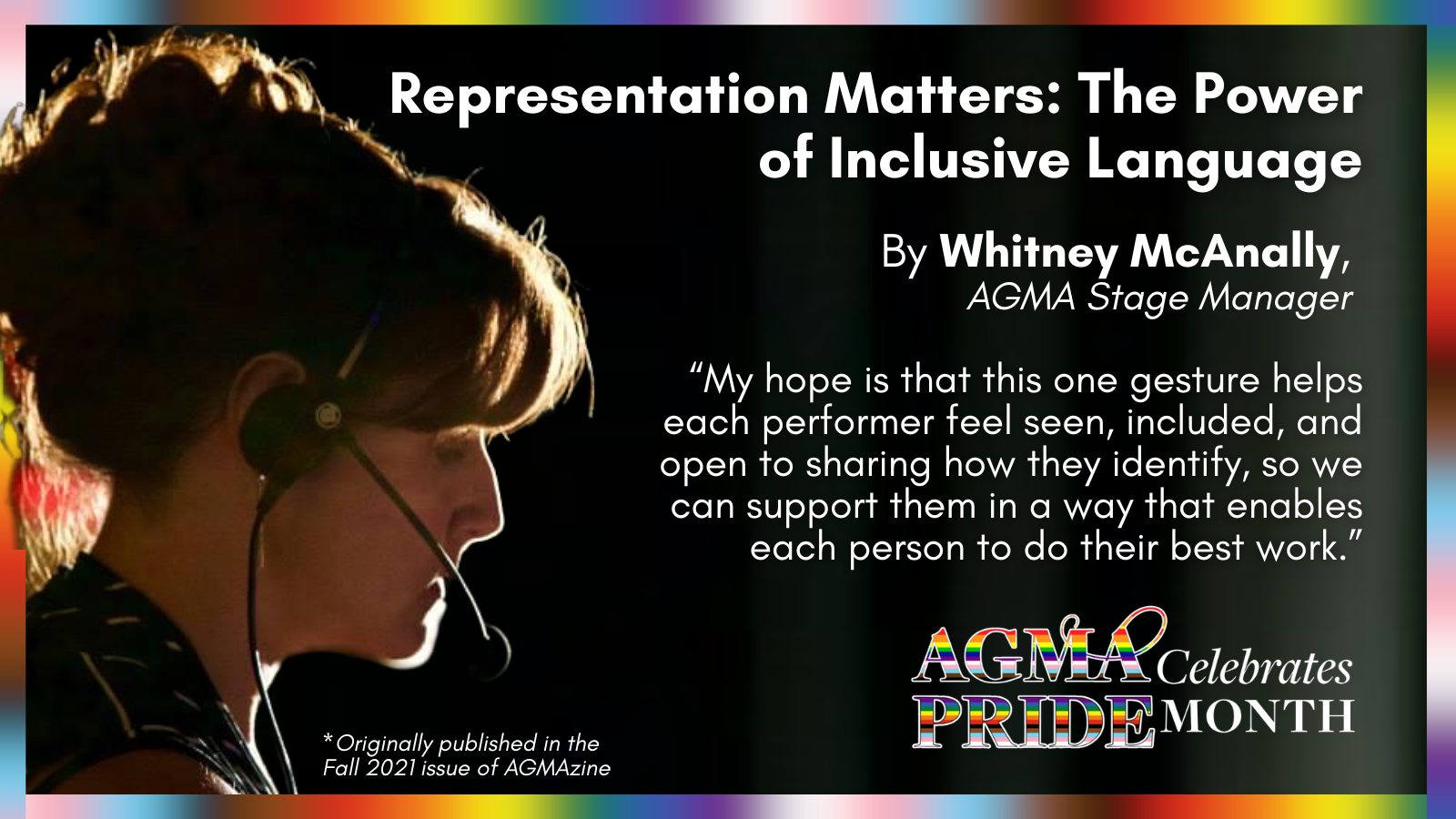
By Whitney McAnally, AGMA Stage Manager
Originally published in the Fall 2021 issue of AGMAzine
“Representation matters.” These are not new words, and these days we are all navigating the best way to be as inclusive as possible in our daily lives. How do we do this? It seems so simple, and yet, there are so many small habits we all have that need adjusting.
The most obvious in the opera house is the use of “Ladies and Gentlemen,” but it extends to paging the Chorus or Supers, and even Principal Artists. It is often up to the staging staff, especially the Stage Managers, to set the tone in the room and onstage. This summer at Santa Fe Opera, at the encouragement of the Production Stage Manager (PSM), Hester Warren-Steijn, we began using full names for Principal Artists and vocal type to address the Chorus. While it’s certainly more to say, I’ve found that it feels like the right direction to go in. Once I returned to my home gig at Los Angeles Opera, I realized I wanted to make the same transition here, and several of my other colleagues at LAO were already doing the same. As PSM, I’ve asked the rest of the staging staff to make these adjustments as well.
The shift in language has been easy and one that, hopefully, allows for additional conversations to take place, conversations that I feel are incredibly important. My hope is that this one gesture helps each performer feel seen, included, and open to sharing how they identify, so we can support them in a way that enables each person to do their best work.
Whitney McAnally joined the LA Opera staging staff in the fall of 2012 and became PSM in 2019. Throughout her career, she’s worked across the nation at AGMA and regional AEA theater houses. She spends her summers at Santa Fe Opera and has been a member of AGMA for 30 years.